X
RSS

Blog posts of '2025' 'December'

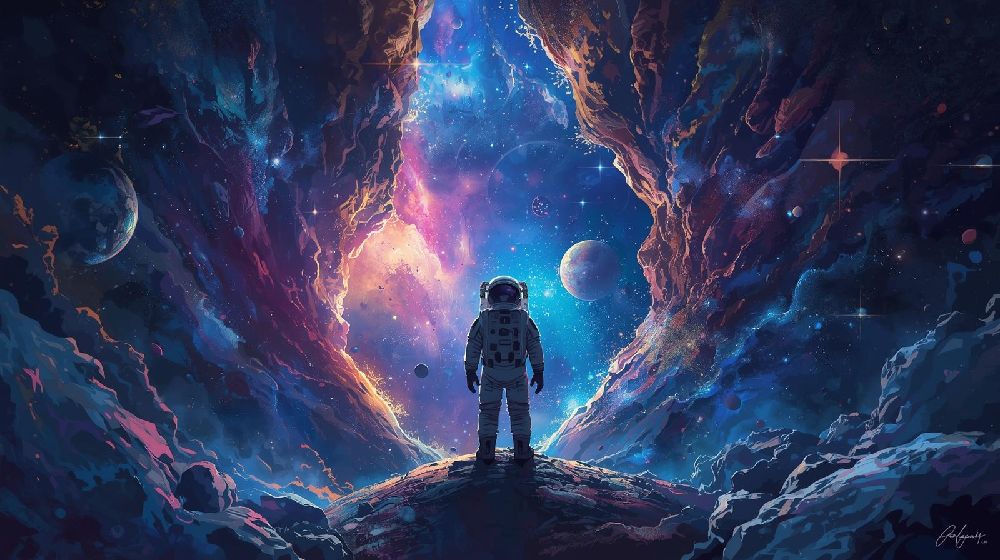
“Exploring the Multiverse: What If Our Universe Isn’t Alone?”. By Prof. Deven Choksi

For centuries, humanity has looked at the stars and wondered whether our universe is unique—or just one of many. Modern physics and cosmology have brought a fascinating possibility into focus: the multiverse. This theory suggests that our universe might be part of an expansive, possibly infinite, collection of universes, each with its own laws of physics, dimensions, and realities.


What Is the Multiverse?

The term “multiverse” refers to the idea that multiple universes exist simultaneously, though most remain undetectable from our own. These universes could be vastly different from ours—or subtly alternate versions of reality. Scientists have proposed several types of multiverses:

  1. Bubble Universes: Cosmic inflation theory suggests that our universe is one “bubble” among countless others, each expanding in its own space-time.

  2. Parallel Worlds: Quantum mechanics implies that every possible outcome of a decision could create a branching universe—a realm where alternative histories unfold.

  3. Higher-Dimensional Universes: Some string theories suggest that additional dimensions may host entirely separate universes beyond our perception.


Why Scientists Consider the Multiverse Possible

The multiverse theory isn’t just science fiction—it arises from real physics:

  • Cosmic Inflation: Moments after the Big Bang, the universe expanded exponentially. Inflationary models suggest this process could generate countless bubble universes.

  • Quantum Mechanics: The famous Schrödinger’s cat thought experiment hints that multiple realities can exist simultaneously at a quantum level.

  • String Theory: The mathematics of string theory predicts a “landscape” of solutions, each corresponding to a universe with different physical constants.

While direct evidence is lacking, these models offer mathematically consistent ways to explain phenomena like dark energy, fine-tuning of physical constants, and cosmic coincidences.


Implications of a Multiverse

If the multiverse exists, it could redefine our understanding of reality and humanity’s place in it:

  • Cosmology: Many “coincidences” in our universe, like the precise balance of physical constants that allow life, could simply be a result of selection bias across countless universes.

  • Philosophy: Questions about free will, destiny, and existential meaning gain new dimensions when alternate realities are considered.

  • Science & Technology: Concepts like faster-than-light travel, wormholes, or quantum communication might find new interpretations in a multiverse framework.


Challenges in Proving the Multiverse

Despite its theoretical appeal, testing the multiverse remains extremely difficult:

  • Observable Limits: By definition, other universes may exist beyond our cosmic horizon, making them fundamentally unobservable.

  • Experimental Constraints: While indirect evidence—such as cosmic microwave background anomalies—offers hints, definitive proof is elusive.

  • Philosophical Debate: Some critics argue that unverifiable universes may fall outside the realm of empirical science.

Yet, researchers continue to explore creative methods, from analyzing cosmic background radiation to quantum simulations, hoping to catch glimpses of parallel realities.


The Multiverse in Popular Culture

The idea of multiple universes has inspired countless novels, movies, and TV series. From superhero crossovers to alternate history tales, the multiverse captures imagination, making abstract physics both entertaining and relatable. These stories encourage us to ask: What if reality is far more expansive than we can ever perceive?


Conclusion

The multiverse is one of the most mind-expanding concepts in modern science. It challenges our understanding of space, time, and existence itself. While we may not yet have proof, exploring the possibility reminds us how much remains unknown—and how curiosity and imagination are essential tools for unraveling the universe’s deepest mysteries.

Whether a single universe or an infinite tapestry of worlds, the quest to understand our cosmic home continues—and the journey is as thrilling as the destination.

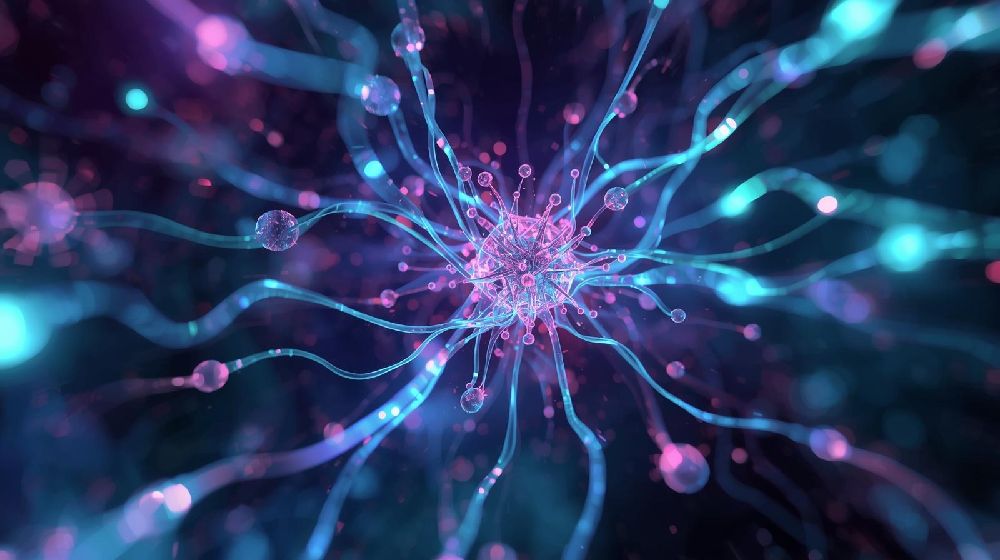
“Beyond the Particle: What CERN’s Newest Experiments Reveal About the Universe”

For decades, CERN has been synonymous with the search for the universe’s smallest building blocks. From the discovery of the Higgs boson to probing the limits of the Standard Model, the European Organization for Nuclear Research has pushed humanity closer to understanding reality at its most fundamental level. But today, CERN’s newest experiments suggest something even more profound: the universe may be less about isolated particles and more about complex systems, hidden dimensions, and unseen forces.

Moving Past the “Particle-Only” View

Traditional physics treats particles as discrete entities—tiny dots interacting through fundamental forces. While this framework has been enormously successful, recent experimental results hint that this picture is incomplete. Anomalies observed in particle behavior suggest that unseen interactions or deeper structures may exist beneath what we currently understand.

Rather than simply cataloging particles, CERN’s modern research focuses on relationships—how particles interact, fluctuate, and transform within fields and spacetime itself.

The Large Hadron Collider: A Universe Simulator

The upgraded Large Hadron Collider (LHC) is no longer just smashing particles together to discover new ones. It now functions as a laboratory for testing the universe’s most extreme conditions—similar to those moments after the Big Bang.

Recent high-precision experiments have allowed scientists to:

  • Measure particle interactions with unprecedented accuracy

  • Detect subtle deviations from expected behavior

  • Search for signs of unknown forces or dimensions

These measurements matter because even the smallest deviation can point toward new physics beyond current theories.

Cracks in the Standard Model

The Standard Model has long been physics’ most successful framework, yet it fails to explain critical cosmic mysteries—dark matter, dark energy, gravity, and the imbalance between matter and antimatter.

Recent CERN experiments have revealed:

  • Unexpected decay patterns in certain particles

  • Violations of symmetry that challenge established assumptions

  • Hints that new particles or forces may influence known matter

These findings don’t overthrow the Standard Model—but they strongly suggest it is only part of a larger, more complex picture.

The Search for Dark Matter Intensifies

One of CERN’s most exciting frontiers is the hunt for dark matter—the invisible substance thought to make up most of the universe’s mass. While dark matter doesn’t interact with light, it may leave subtle fingerprints in high-energy collisions.

New detectors and data-analysis techniques are enabling scientists to:

  • Narrow down dark matter candidates

  • Explore weakly interacting particles beyond known categories

  • Test theories involving hidden sectors of the universe

Each experiment brings us closer to understanding what truly holds galaxies together.

Quantum Fields, Not Just Particles

Modern experiments increasingly support the idea that particles are excitations of underlying quantum fields rather than standalone objects. This shift reframes reality itself—suggesting the universe is more like a dynamic ocean of energy than a collection of solid building blocks.

CERN’s work helps bridge quantum mechanics and cosmology, revealing how microscopic field fluctuations may shape large-scale cosmic structures.

Technology Born from Fundamental Curiosity

Beyond cosmic insights, CERN’s experiments drive innovation on Earth. Advances in:

  • Superconducting magnets

  • Data processing and AI-driven analysis

  • Medical imaging and cancer therapy

all trace roots back to particle physics research. Exploring the universe at its smallest scales continues to produce tangible benefits for humanity.

A New Philosophy of the Universe

Perhaps the most profound revelation from CERN’s latest experiments is philosophical rather than technical. The universe appears less deterministic, less isolated, and more interconnected than once believed. Reality may emerge from probabilities, relationships, and hidden dimensions beyond direct observation.

This evolving understanding challenges how we define matter, space, and existence itself.

Conclusion

CERN’s newest experiments take us beyond the particle—toward a universe defined by interaction, mystery, and unseen structure. As scientists peer deeper into the fabric of reality, each discovery reshapes not only physics but humanity’s place within the cosmos. The journey is far from over, but one thing is clear: the universe is richer, stranger, and more beautiful than we ever imagined.


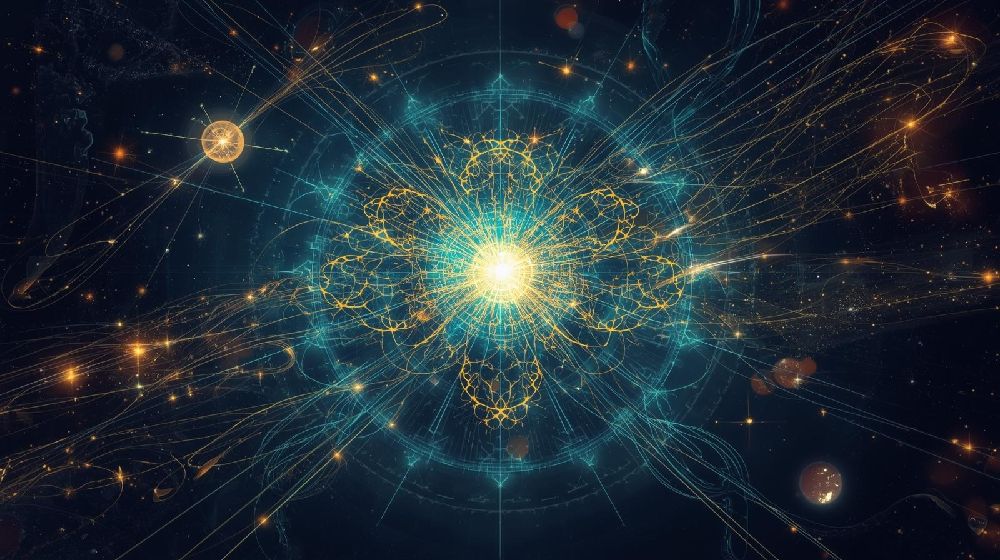
“Quantum Gravity: The Missing Link Between Relativity and the Microscopic World” By Prof. Deven Choksi

For over a century, physics has been guided by two towering pillars: Einstein’s theory of General Relativity, which describes the cosmos at large scales, and Quantum Mechanics, which governs the behavior of the microscopic world. Both are extraordinarily successful in their domains, yet they appear incompatible when trying to describe phenomena where both extreme gravity and quantum effects are at play—like inside black holes or at the Big Bang. This is where the concept of Quantum Gravity comes in.


Why Quantum Gravity Matters

At its core, quantum gravity seeks to unify the laws of the very large and the very small. While General Relativity explains gravity as the curvature of spacetime caused by mass and energy, Quantum Mechanics explains the interactions of subatomic particles in terms of probabilities. In extreme environments—like a black hole’s singularity—both theories must coexist, but they currently produce contradictory predictions.

A working theory of quantum gravity could:

  • Resolve singularities in black holes

  • Explain the origin of the universe at the Big Bang

  • Uncover new particles or forces beyond the Standard Model

  • Bridge gaps between fundamental forces of nature


Leading Approaches to Quantum Gravity

Several theoretical frameworks are exploring this elusive link:

1. String Theory

  • Proposes that fundamental particles are actually tiny vibrating strings.

  • Strings’ vibrations determine particle properties and forces.

  • Offers a framework where gravity naturally emerges alongside other forces.

2. Loop Quantum Gravity (LQG)

  • Suggests that spacetime itself is quantized, composed of discrete loops.

  • Predicts a “granular” structure of space at the Planck scale.

  • Attempts to preserve the principles of General Relativity while incorporating quantum effects.

3. Causal Dynamical Triangulations & Other Models

  • Use mathematical techniques to approximate spacetime geometry at quantum scales.

  • Aim to reconcile the smooth fabric of relativity with the discrete nature of quantum mechanics.


Challenges Facing Quantum Gravity

  • Experimental Verification: The Planck scale, where quantum gravity effects dominate, is far beyond current particle accelerators’ reach.

  • Mathematical Complexity: Combining the continuous geometry of relativity with quantum discreteness is exceptionally challenging.

  • Conceptual Hurdles: Quantum gravity challenges our understanding of time, space, and causality, often requiring entirely new ways of thinking.


Why It Captivates Scientists and Philosophers

Quantum gravity is not just a physics problem—it’s a philosophical quest. It addresses fundamental questions about the nature of reality: What is space? What is time? How did the universe begin? Solving it could reshape our understanding of existence itself.


Conclusion

Quantum gravity represents the frontier of modern physics—a daring attempt to bridge the vastness of the cosmos with the minutiae of particles. While a complete theory remains elusive, progress in string theory, loop quantum gravity, and other models brings us closer to uniting relativity with quantum mechanics. The pursuit of quantum gravity is more than scientific—it’s humanity’s quest to comprehend the very fabric of reality.

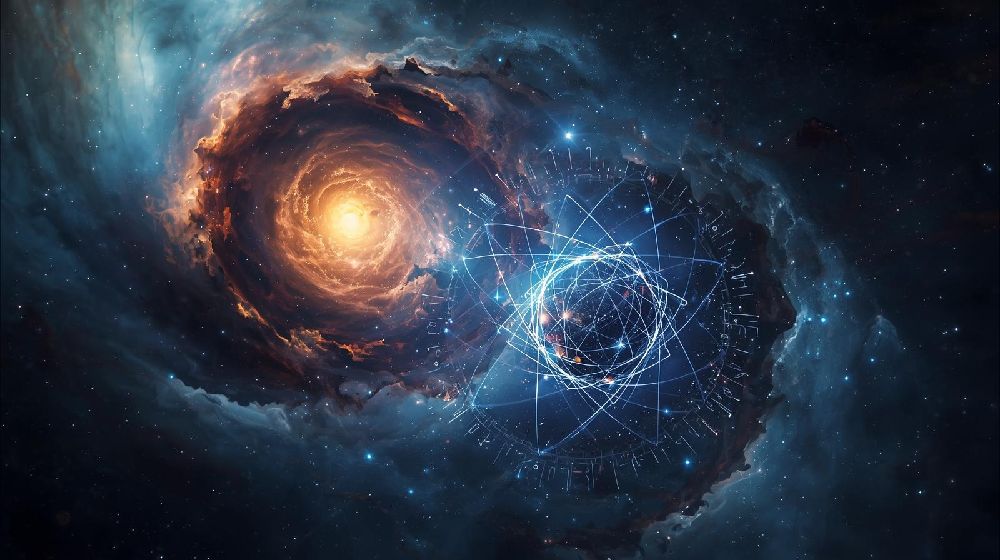
“Quantum Materials: The Superconductors That Could Transform Energy Use” By Prof. Deven Choksi

In the race for sustainable energy and ultra-efficient technology, quantum materials are emerging as a game-changer. Among them, superconductors—materials that conduct electricity without resistance—hold the potential to revolutionize the way we generate, transmit, and store energy.

“CRISPR and Quantum Biology: The Intersection of Gene Editing and Quantum Mechanics” By Prof. Deven Choksi

The worlds of gene editing and quantum physics might seem galaxies apart, but recent scientific advancements suggest a fascinating intersection. CRISPR, the revolutionary gene-editing technology, and quantum biology, the study of quantum effects in living systems, are beginning to overlap—paving the way for breakthroughs in medicine, biotechnology, and our understanding of life itself.

“The Quantum Mind: Can Consciousness Be Explained by Physics?”

Consciousness—the inner experience of thoughts, feelings, and awareness—remains one of the greatest mysteries of science. While neuroscience maps the brain’s activity and psychology studies behavior, a growing number of researchers are exploring whether quantum physics could hold the key to understanding the mind.

Time Travel and Quantum Entanglement: Is Science Catching Up With Imagination?

For decades, science fiction has fascinated us with visions of time travel, parallel worlds, and instant connections across galaxies. What once belonged solely to imagination is now being discussed seriously in scientific circles—thanks largely to breakthroughs in quantum physics, especially the mysterious phenomenon of quantum entanglement.

How Students Can Conduct Quantum Experiments Using Online Simulators

Quantum science is no longer limited to advanced laboratories or expensive research facilities. Today, students can explore the mysterious and powerful world of quantum mechanics right from their laptops. Thanks to online quantum simulators, learners can perform real quantum experiments, visualize concepts, and build practical skills—without needing access to actual quantum hardware. This shift is opening doors for young innovators who want to explore the future of science and technology.


How Digital Labs and AI Are Revolutionizing Science Education By Prof. Deven Choksi

Science education is undergoing one of the biggest transformations in history. Traditional teaching—once limited to textbooks, chalkboards, and physical labs—has evolved into a dynamic, digital-first experience. Today, digital labs and artificial intelligence (AI) are reshaping the way students learn, experiment, and understand scientific concepts.

The Hidden Heroes of Science: How Professors Drive Research in Quantum Technology

In the world of scientific breakthroughs, the spotlight often shines on advanced laboratories, futuristic machines, and groundbreaking discoveries. But behind every innovation in quantum technology, there is a guiding force often overlooked—the professors who mentor, research, teach, and push the boundaries of what we know.