

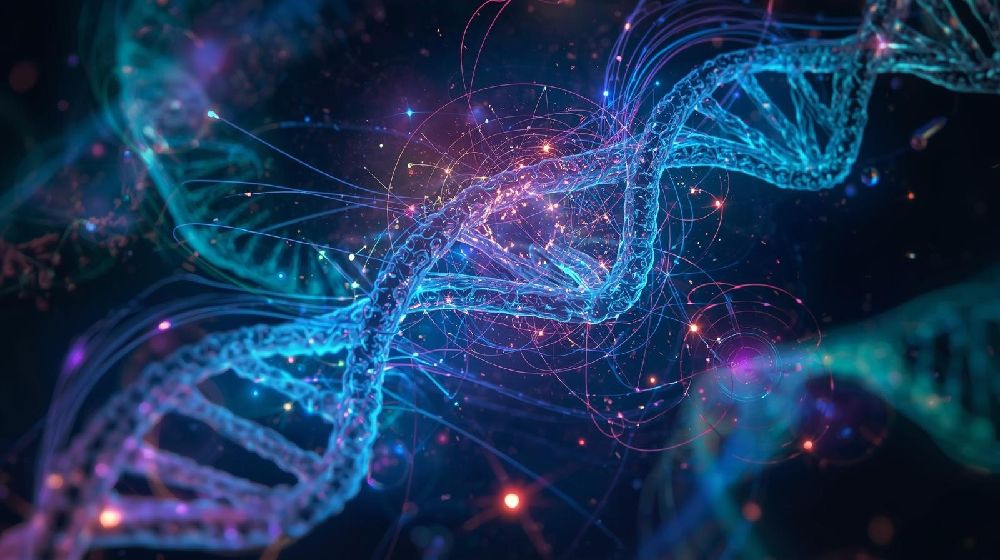
The worlds of gene editing and quantum physics might seem galaxies apart, but recent scientific advancements suggest a fascinating intersection. CRISPR, the revolutionary gene-editing technology, and quantum biology, the study of quantum effects in living systems, are beginning to overlap—paving the way for breakthroughs in medicine, biotechnology, and our understanding of life itself.
CRISPR: Precision at the Molecular Level
CRISPR (Clustered Regularly Interspaced Short Palindromic Repeats) allows scientists to edit DNA with unprecedented precision. By targeting specific genes, researchers can correct mutations, enhance desired traits, and potentially cure genetic diseases. Its speed, accuracy, and versatility have made CRISPR one of the most exciting tools in modern biology.
Quantum Biology: Life on a Quantum Scale
Quantum biology explores how quantum phenomena, such as superposition, entanglement, and tunneling, influence biological processes. Examples include:
Photosynthesis efficiency in plants
Enzyme reactions
Magnetoreception in birds
These studies reveal that living systems may exploit quantum mechanics to optimize function at the molecular level.
Where CRISPR Meets Quantum Mechanics
At first glance, gene editing and quantum physics seem unrelated. But the molecular precision required for CRISPR may be influenced by quantum effects:
Electron tunneling could affect DNA cleavage accuracy.
Quantum coherence may influence how CRISPR molecules locate target sequences.
Quantum simulations can model protein-DNA interactions more efficiently than classical methods.
In essence, understanding quantum mechanics can enhance CRISPR’s precision, potentially reducing off-target effects and improving outcomes.
Quantum Computing Accelerates Gene Editing Research
Quantum computers are uniquely suited to simulate complex molecular systems. In CRISPR research, they can:
Predict optimal DNA target sites
Model protein-DNA interactions
Forecast gene-editing efficiency and risks
This integration could make personalized gene therapy safer, faster, and more effective.
Ethical Implications
As with any powerful technology, combining CRISPR and quantum biology raises ethical questions:
How far should gene editing go?
Could quantum-enhanced CRISPR widen global inequalities?
What are the long-term ecological impacts of editing genomes at scale?
Understanding both the science and its societal consequences is crucial.
The Future of Life Sciences
The fusion of CRISPR and quantum biology is still in its early stages, but it promises transformative possibilities:
Quantum-informed gene therapies
Ultra-precise genetic diagnostics
Synthetic biology breakthroughs
New treatments for previously untreatable diseases
This frontier is a perfect example of interdisciplinary science driving the next wave of innovation.
Conclusion
CRISPR and quantum biology together illustrate a profound truth: life is both classical and quantum. By leveraging quantum mechanics, scientists can refine the tools that reshape genomes, offering hope for cures, enhanced understanding of biology, and a new era in biotechnology.
The intersection of these fields is not just about science fiction—it is the beginning of a quantum revolution in gene editing.