

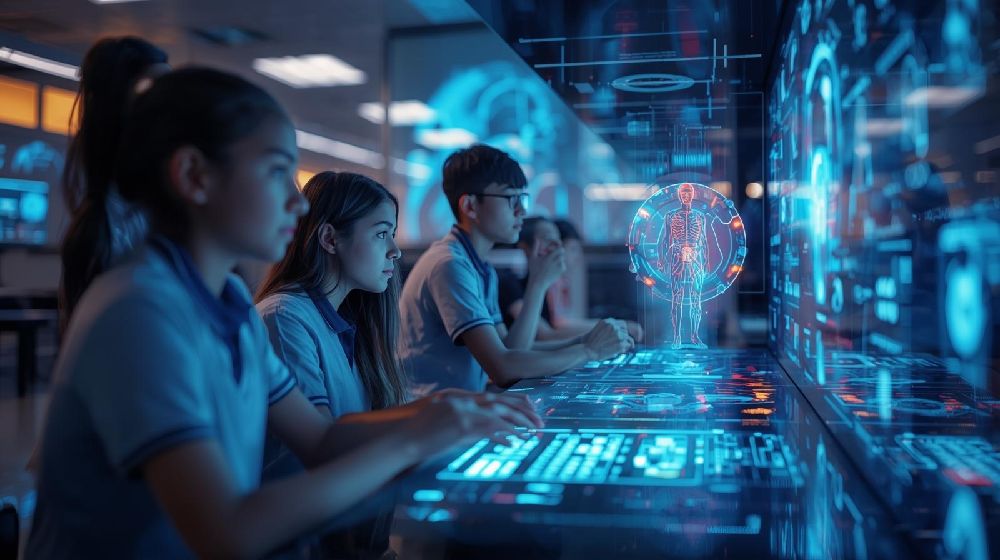
Science education is undergoing a powerful transformation. Traditional classrooms, once limited by physical equipment and fixed lab schedules, are now expanding into digital labs powered by artificial intelligence (AI). These innovations are reshaping how students learn, experiment, and understand scientific concepts—making science education more accessible, engaging, and effective than ever before.
The Rise of Digital Laboratories
Digital labs are virtual or remote environments where students can conduct experiments using simulations, real-time data, and interactive tools. These labs remove physical constraints such as limited resources, safety risks, and high equipment costs. Students can repeat experiments, explore complex scenarios, and learn at their own pace—something often impossible in traditional lab settings.
AI as a Personalized Learning Partner
AI enhances science education by adapting to individual learning styles. Intelligent systems analyze student performance, identify knowledge gaps, and provide customized feedback. This personalized approach helps students grasp difficult scientific concepts more efficiently and builds confidence through continuous support and guidance.
Enhancing Practical Understanding Through Simulation
AI-driven simulations allow students to visualize abstract concepts such as molecular interactions, chemical reactions, or physics principles. By interacting with digital models, learners gain deeper conceptual understanding without the risks or limitations of physical experiments. These immersive experiences bridge the gap between theory and practice.
Expanding Access and Inclusivity
Digital labs democratize science education. Schools in remote or under-resourced areas can access high-quality experimental tools without investing in expensive infrastructure. Students with physical limitations or scheduling challenges can participate fully, ensuring equal learning opportunities across diverse educational environments.
Data-Driven Learning and Assessment
AI enables real-time assessment by tracking student progress and experiment outcomes. Educators gain insights into learning patterns, allowing them to refine teaching strategies and provide targeted support. This data-driven approach ensures continuous improvement in both instruction and student performance.
Preparing Students for Future Careers
Exposure to digital labs and AI tools equips students with skills relevant to modern scientific and technological careers. Familiarity with data analysis, virtual experimentation, and AI-driven systems prepares learners for advanced education and innovation-driven industries.
Final Thoughts
Digital labs and AI are redefining science education by making learning more interactive, personalized, and inclusive. As technology continues to evolve, these tools will play a vital role in shaping future scientists, researchers, and innovators.
By blending curiosity with technology, science education is no longer confined to the classroom—it’s becoming a dynamic, limitless learning experience.